
An LLM Gateway is a software layer that sits between your application and one or more AI model providers.
Instead of your application maintaining separate integrations with every provider, requests can be routed through a centralized gateway.
A simplified architecture looks like this:
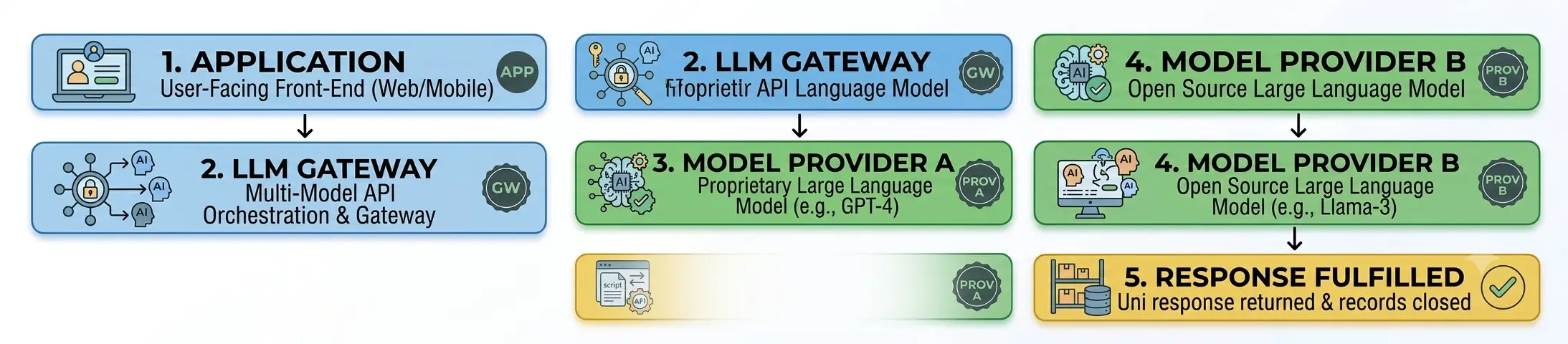
The gateway becomes the central control point for your AI traffic.
Depending on the implementation, it can handle:
- Authentication
- Model routing
- Cost management
- Budget enforcement
- Rate limiting
- AI guardrails
- Observability
- Provider failover
Why Do Developers Need an LLM Gateway?
Connecting directly to one model provider isn’t necessarily complicated.
The challenge starts when an application needs to work with multiple providers.
Your codebase may need to manage:
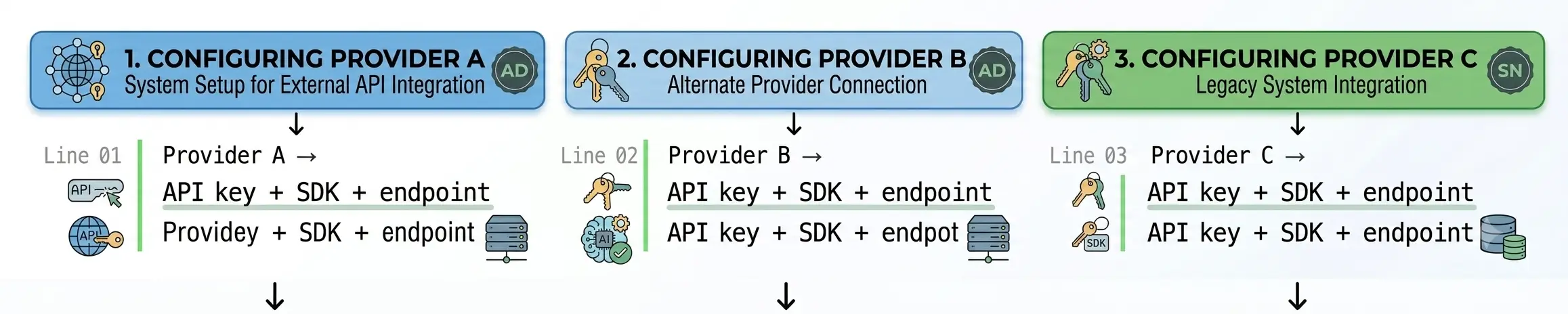
Each provider can have different:
- APIs
- SDKs
- Authentication mechanisms
- Pricing
- Rate limits
- Error responses
- Model capabilities
Over time, this provider-specific logic can spread throughout the application.
An LLM gateway creates another layer:
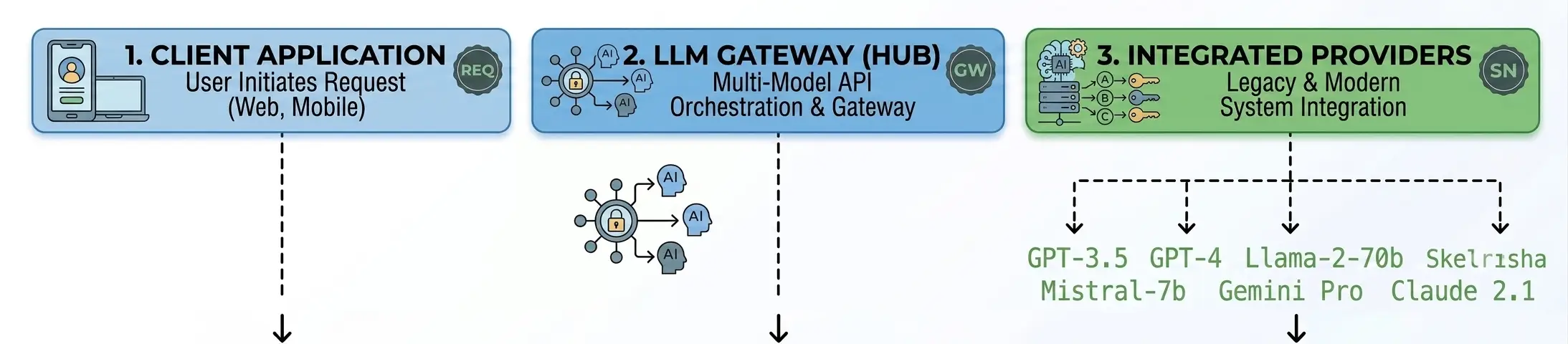
This allows your application to communicate with a centralized interface while the gateway handles much of the provider-specific complexity.
One API for Multiple Models
One of the biggest advantages of an LLM gateway is a unified API interface.
Rather than rebuilding your application whenever you want to test another model, you can route requests through the gateway.
This can make it easier to:
- Experiment with new models
- Switch providers
- Add additional models
- Implement fallback strategies
- Centralize authentication
- Monitor AI usage
For developers, this creates a useful separation:
Application logic shouldn’t have to depend heavily on model-provider infrastructure.
Your application focuses on what the AI needs to accomplish, while the gateway manages how the request reaches the appropriate model.
Smart Model Routing
Not every request needs the same model.
Consider a typical AI application:
| Workload | Priority |
|---|---|
| Simple classification | Cost |
| Chat response | Speed + quality |
| Code generation | Capability |
| Complex reasoning | Accuracy |
| High-volume processing | Cost + throughput |
Sending every request to the most expensive model may not be the most efficient architecture.
AnLLM gateway can apply routing rules based on factors such as:
- Model capability
- Cost
- Latency
- Availability
- Request type
For example:
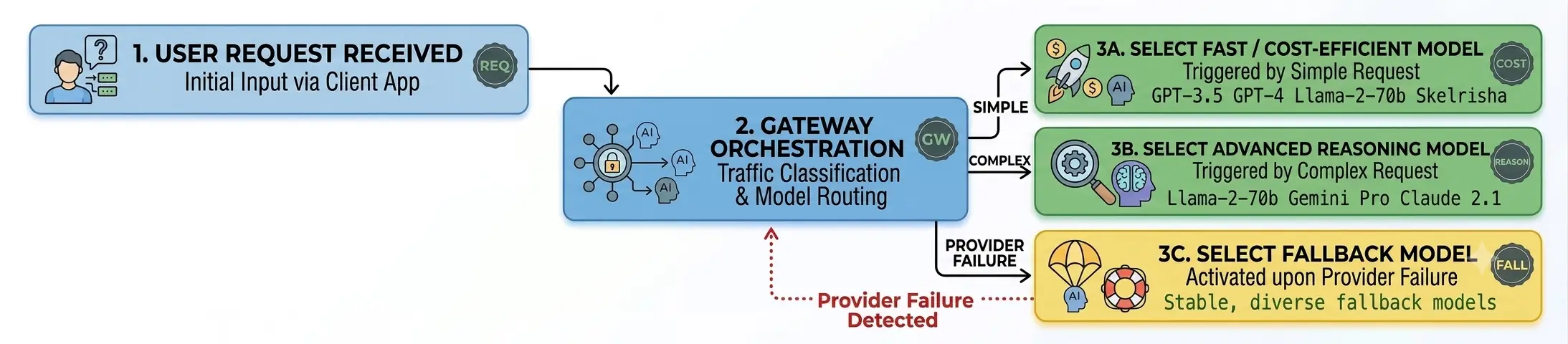
This allows developers to build more flexible multi-model systems.
LLM Cost Control
AI infrastructure isn’t only about model performance.
Cost matters.
As applications scale, thousands or millions of model requests can generate significant spending.
The problem is that looking at the final monthly invoice doesn’t always tell you what caused the spending.
You may want to know:
- Which application consumed the most?
- Which team generated the most requests?
- Which model is the most expensive?
- Which customer generated the most usage?
- How much did a particular AI feature cost?
Centralized LLM infrastructure can make this information easier to track.
For example:
Coding Agent      → $450
Customer Support  → $280
Research Agent    → $320
RAG Application   → $190
This type of visibility can help teams identify inefficient workloads and optimize their model strategy.
Budget Enforcement for AI Agents
Cost controls become even more important when working with autonomous AI agents.
A normal application may send one model request and receive one response.
An AI agent can behave differently.
A single task might involve:
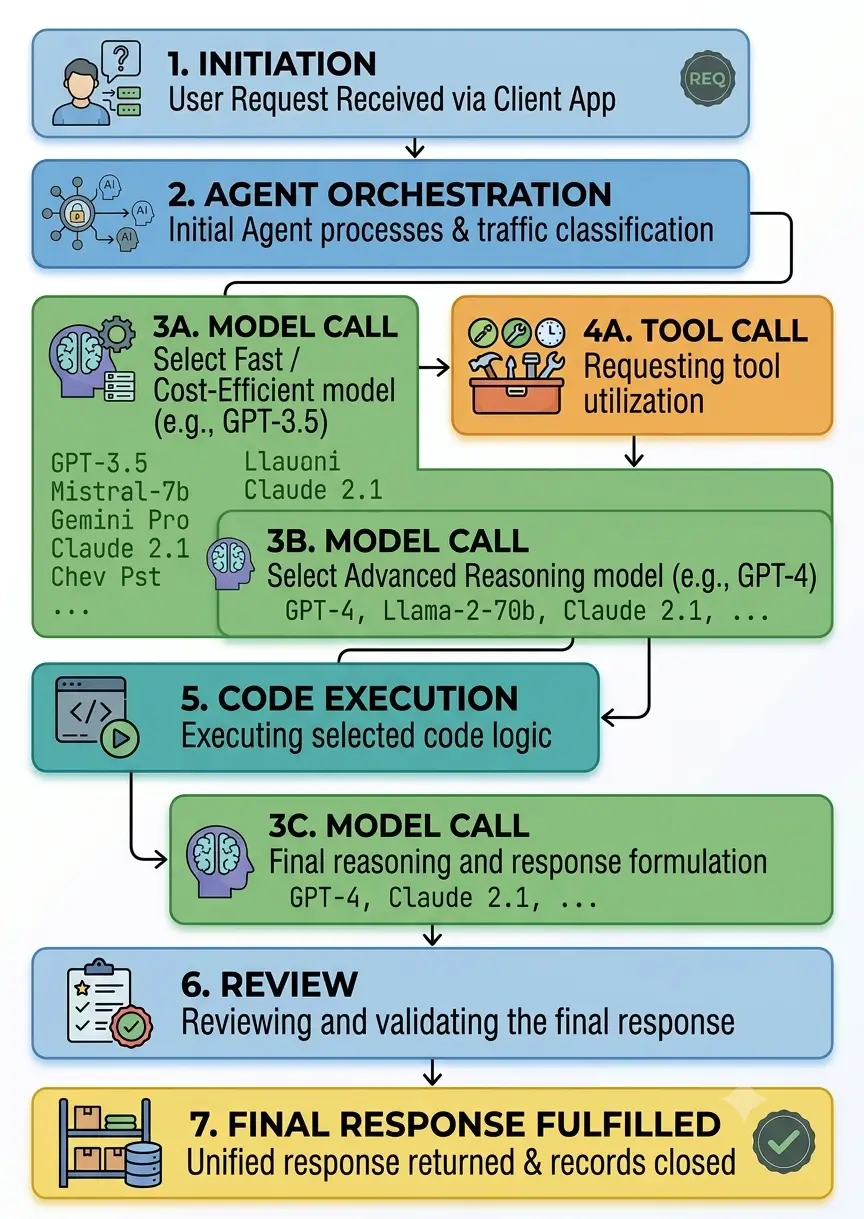
Each step can potentially create additional model usage.
Without spending boundaries, an unexpected loop or repeated retry could increase the cost of a task.
Per-run budgets and other usage controls can give these autonomous systems defined limits.
The idea isn’t to eliminate agent autonomy.
It’s to provide:
Autonomy with financial boundaries.
AI Guardrails
LLM applications also need security controls.
Applications may process sensitive information or receive potentially malicious inputs.
An LLM gateway can provide a centralized location for applying AI guardrails.
Depending on the platform, these may include:
- PII protection
- Prompt-injection detection
- Content safety
- Request filtering
- Response validation
- Security policies
Centralizing these controls can reduce the need to duplicate the same security logic across multiple applications.
Observability for LLM Applications
Debugging traditional applications is already challenging.
Debugging applications that depend on multiple AI providers can be even more complicated.
You may need to understand:
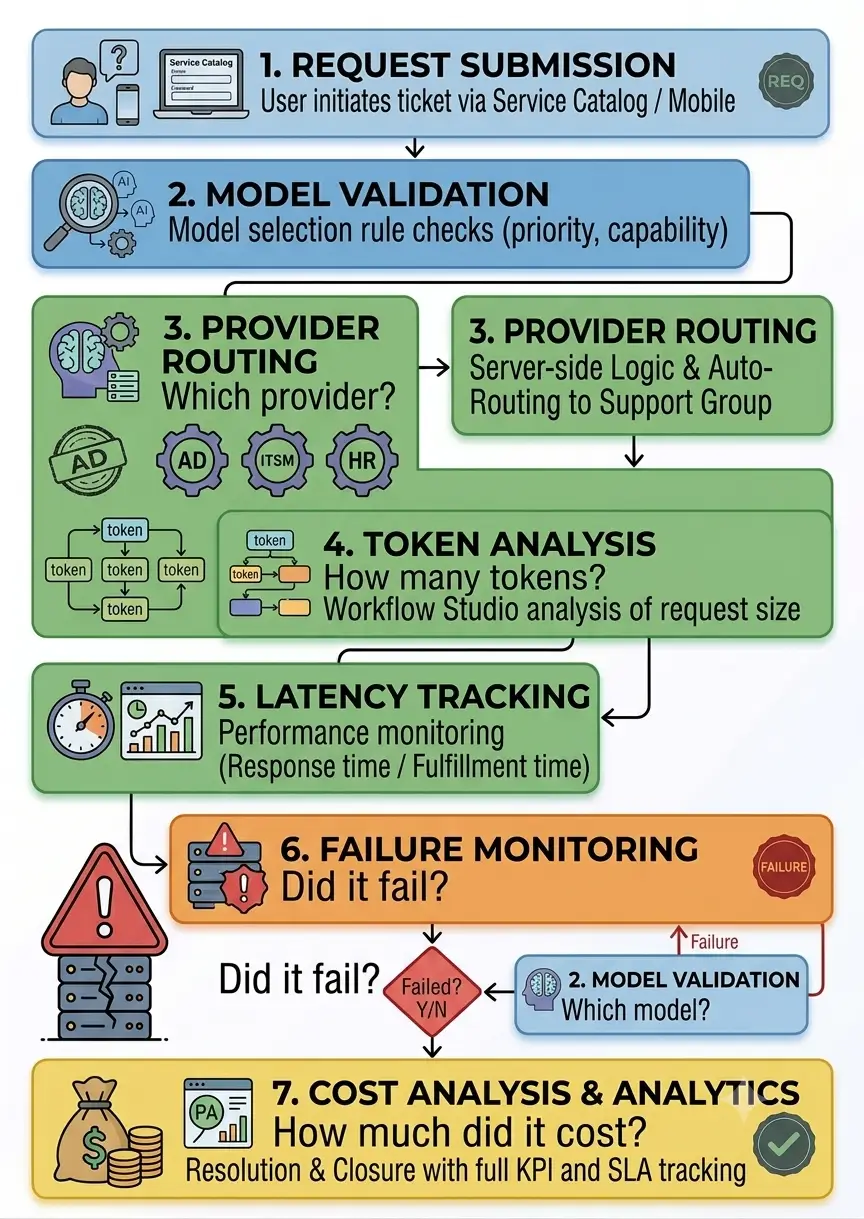
An LLM gateway can provide a centralized view of AI traffic.
Useful metrics can include:
- Request volume
- Token usage
- Latency
- Errors
- Model usage
- Provider performance
- Cost
This visibility can help developers troubleshoot issues and optimize their AI infrastructure.
Provider Failover
What happens if your preferred model provider becomes unavailable?
Without a fallback strategy:
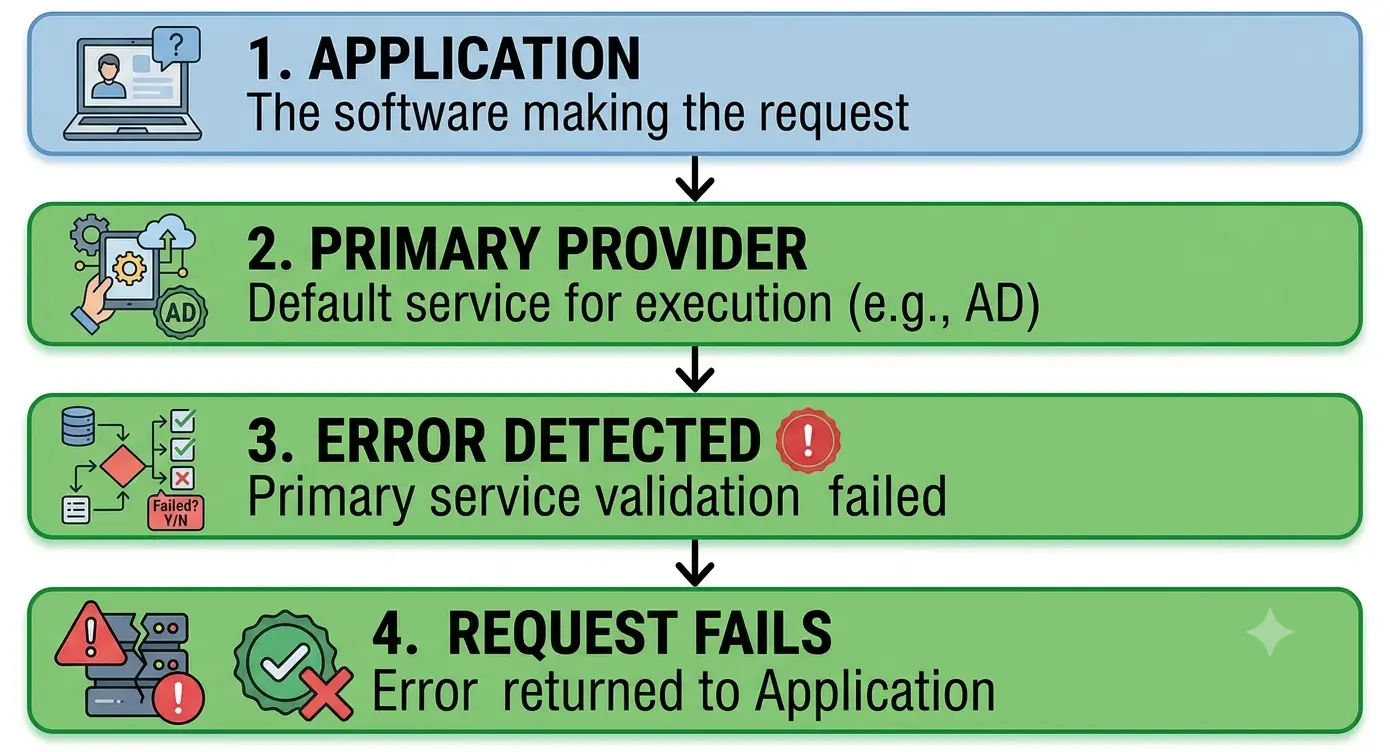
With a configured fallback:
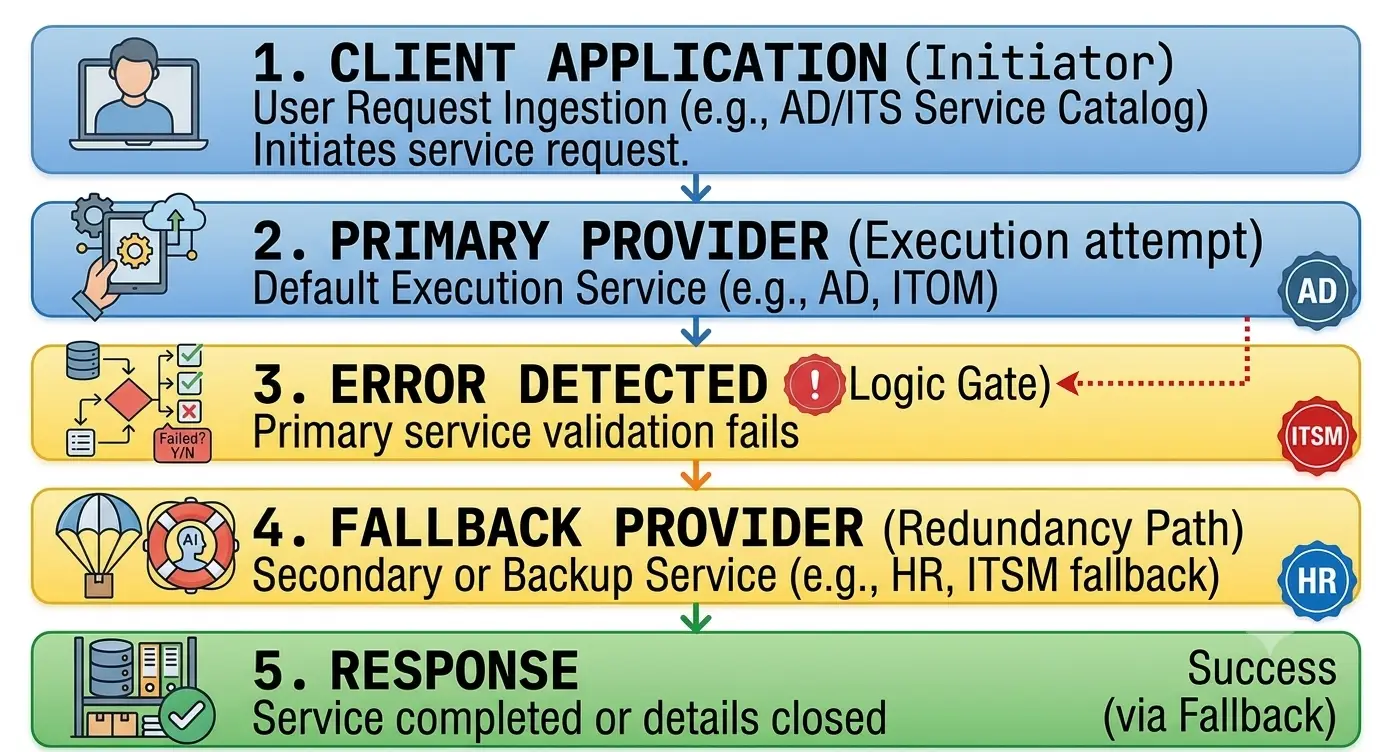
Provider failover can help improve the reliability of AI applications.
This becomes particularly important for production systems where an AI provider outage shouldn’t necessarily bring the entire application to a stop.
What Does an LLM Gateway Architecture Look Like?
Putting these capabilities together, the architecture can look like this:
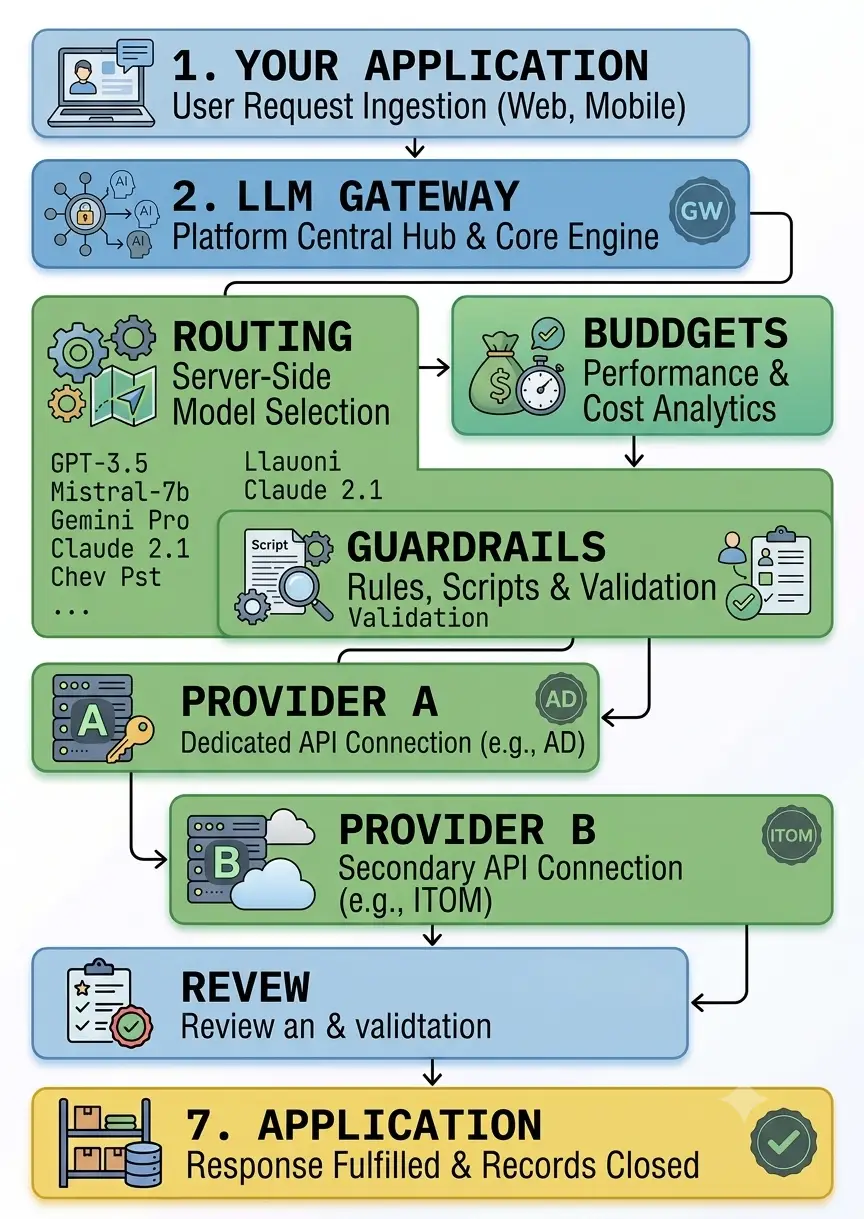
The gateway becomes the infrastructure layer responsible for managing AI traffic.
What Should Developers Look for in an LLM Gateway?
If you’re evaluating an LLM gateway, consider these capabilities.
Multi-provider support
Can you access models from multiple providers?
Unified API
Can your application communicate with different models through a consistent interface?
Smart routing
Can requests be routed according to cost, latency, capability, or availability?
Budget controls
Can you establish spending limits for teams, API keys, or AI workloads?
Guardrails
Can you apply security policies to AI requests and responses?
Observability
Can you monitor usage, latency, errors, and costs?
Failover
Can the gateway route requests to an alternative provider when the primary one fails?
Developer experience
Can you integrate the gateway without having to significantly rewrite your existing application?
These factors can make the difference between simply having another API endpoint and having a useful AI infrastructure layer.
Why Multi-Model AI Needs Better Infrastructure
The AI ecosystem is evolving quickly.
New models appear frequently, providers change pricing, model capabilities improve, and application requirements change.
Building your entire application around a single provider can make switching more difficult later.
A multi-model architecture provides more flexibility:
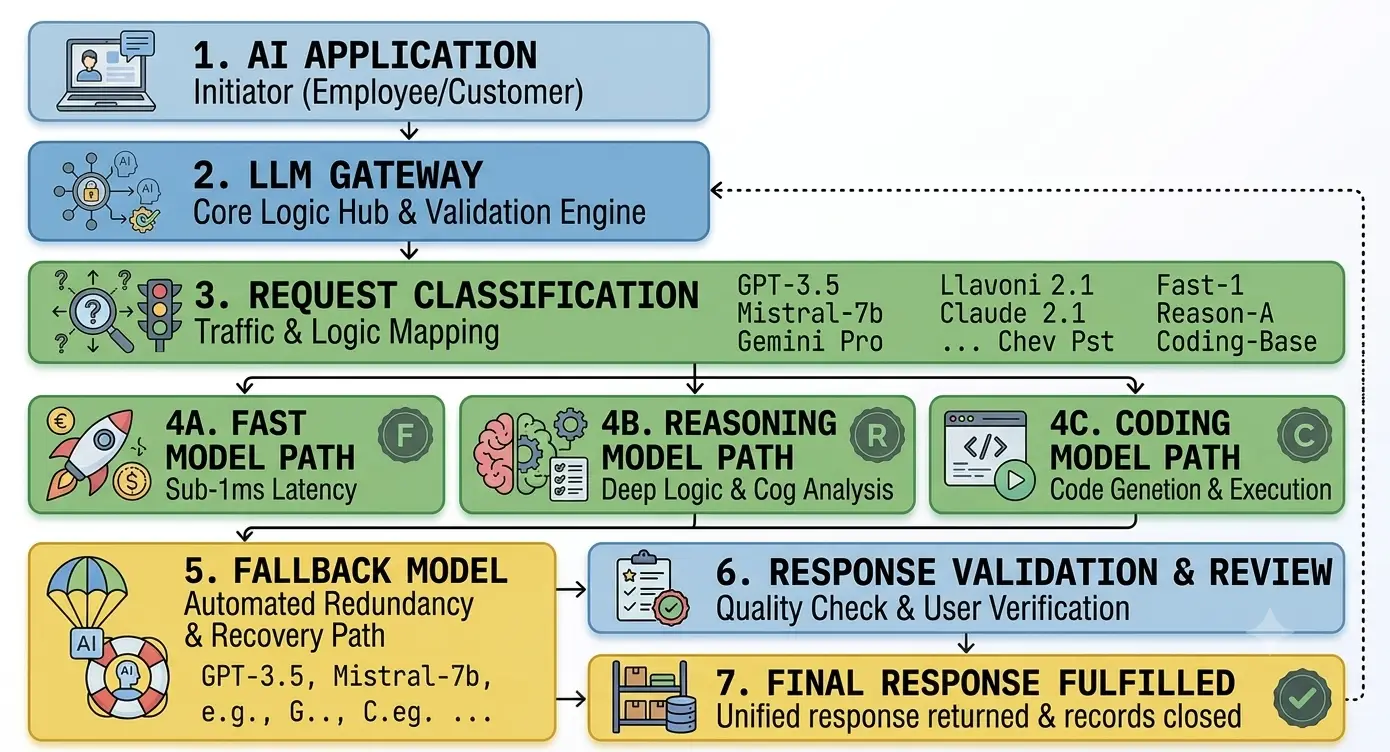
The application can focus on its business logic while the gateway manages model infrastructure.
Final Thoughts
An LLM gateway can provide a centralized control layer for modern AI applications.
Instead of managing every model provider independently, developers can use a gateway to handle:
Authentication
Model routing
Cost management
Budget enforcement
AI guardrails
Observability
Provider failover
This becomes particularly valuable as applications move toward multi-model architectures and autonomous AI agents.
The goal is simple:
Build with multiple models without multiplying infrastructure complexity.